The history of leather goods
by Kalila Kaci
The art of leatherwork: a precious heritage in the heart of Morocco since the 12th century
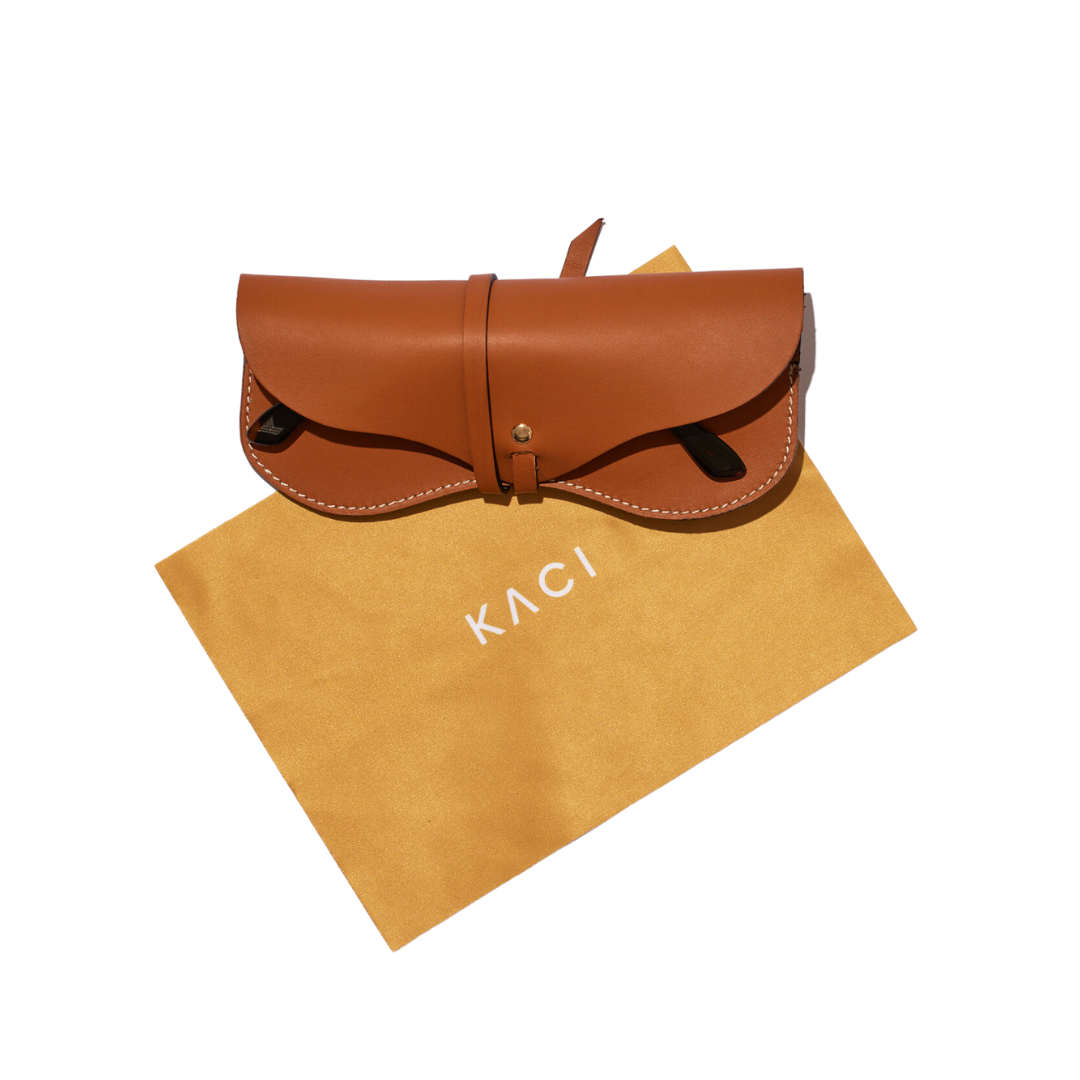
At KACI , we respect this ancestral heritage through our vegetable-tanned cowhide leather eyeglass cases. More than just an accessory, each case pays homage to age-old know-how and a tradition deeply rooted in Moroccan culture.
The promise of quality and durability
Vegetable-tanned leather is a noble material, tanned using plant extracts, unlike chemical processes, and is environmentally friendly. It gives the leather a unique appearance, a pleasant natural scent, and exceptional durability. Our cases are designed to last: they develop a patina and become more beautiful, like a fine wine that ages gracefully.
The history of leather goods
Having grown up in Morocco, it seemed obvious to us to showcase this ubiquitous expertise. The very term "leather goods" has its origins in Morocco, deriving from the word "morocco," which referred to the tanning of goat leather with sumac.
Since the 12th century, the city of Fez has been renowned for the finesse of its leathers and its unparalleled expertise. This mastery traveled through Al-Andalus to Europe, influencing major centers such as Cordoba and Florence. While Europe brought its own innovations, it has always recognized the primacy of Moroccan craftsmanship, of which Fez remains a living symbol.
Today, leather goods more broadly refer to objects made from leather and other materials, but its essence still draws on this heritage of excellence.
Ethics above all
As a responsible brand, the choice of our raw materials is a crucial issue. Animal suffering is a legitimate concern. However, it's important to remember that leather mainly comes from the food industry. Without the recovery of these hides, they would be lost, generating a significant environmental cost.
Alternatives such as "vegan leather," often derived from petrochemicals, sometimes lack transparency regarding their composition. Consumers are faced with a choice: opt for a synthetic material or choose recycled, sustainable, and authentic leather.
Our commitment at KACI
We carefully select suppliers who share our ethical and environmental values. Each case is carefully handcrafted, respecting traditional craftsmanship, embodying our passion for quality and a job well done.
Choosing a KACI eyeglass case means adopting an elegant and durable accessory, but also supporting an eco-responsible approach and promoting artisanal heritage. These cases are not just objects: they are testaments to a commitment to ethics, quality, and natural beauty.